Future water leaders spotlight series: how ancestral wisdom and community power can redefine nature‑based solutions
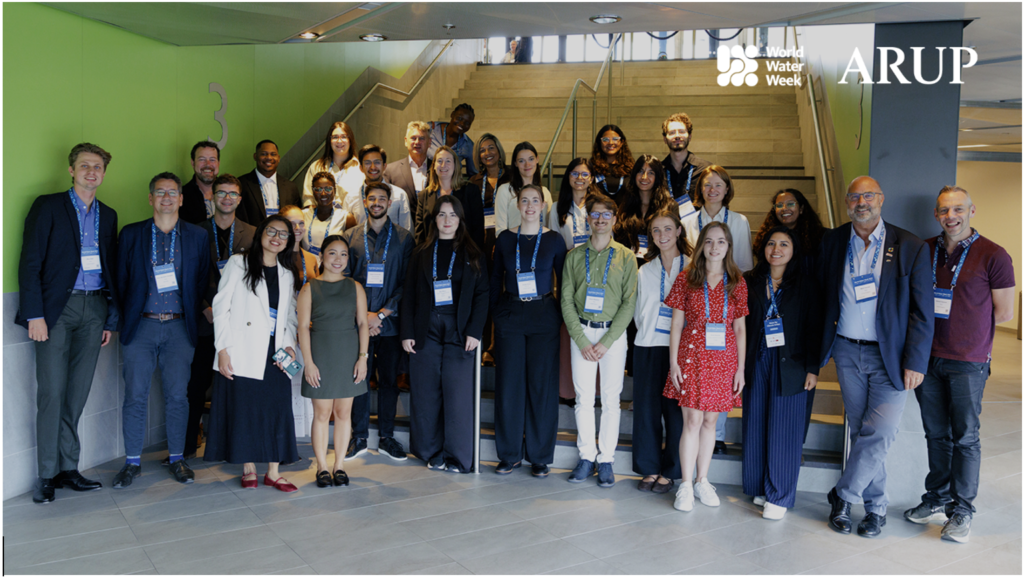
As part of the Future Water Leaders programme, I recently met with @Livia Beatriz Machado de Almeida, a design engineer at Arup, to discuss Nature Based Solutions. Our conversation explored how ancestral wisdom and community engagement can truly redefine nature-based solutions. We discussed the need to weave traditional knowledge, cross-sector collaboration, and genuine community codesign into sustainable models, highlighting the challenges and the role of organisations like Equity Future in bridging science with time-tested practices. This dialogue reinforced my belief that sustainability is rooted in diversity, of voices, regions, and generations, and that our global water community is strongest when we create space for these perspectives to shape the future. Being a part of the Future Water Leaders programme, a collaboration between @Siwi and @Arup, and having the opportunity to attend at World Water Week, allowed these vibrant connections and conversations come to life.
My Key Takeaway
True sustainability happens when science and tradition meet, and when communities own the solutions
__________________________________________________________________
What NbS mean to me
We often sprint toward “new” ideas and overlook the knowledge that’s been working for generations. For me, NbS begin with ancestral and traditional techniques, locally evolved ways of managing water, ecosystems, and conflict that have rarely been recognised in formal systems.
When I visited my mother’s village in southern Chad, I learned about Teum Kourayeu, the “guardian of water.” It’s an ancestral practice, a living management system, and a reminder: solutions already exist. Our job is to recognise, translate, and connect them with science and policy, without erasing their roots.
Community co‑design is non‑negotiable
Sustainable tools don’t come from drop‑in fixes; they come from co‑design. When communities shape the tools, they develop ownership, and ownership creates durability.
That means doing the harder work: listening, building trust, and translating knowledge both ways. Scientific concepts must resonate locally, and local insights must be legible to policymakers and funders. Representation matters too, people need to see their realities reflected in the process and the outcomes.
Bridging ancestral knowledge and formal science
Pilot projects are powerful proof. They move ideas from “great concept” to evidence people can see and feel. But demonstration is the end of a longer path that starts with co‑design. We need practitioners who can serve as translators, spending time in place, learning practices on the ground, and articulating them in terms that institutions can adopt and scale.
In many African contexts, knowledge transmission is primarily oral. That makes documentation and storytelling critical, so communities gain pride in their knowledge, and decision‑makers grasp its value.
Why art belongs in NbS
Art is a universal language. It touches identity, pride, and belonging, things data alone can’t reach. In our work at Equity Future, artistic tools help reconnect people to who they are and where they come from, transforming engagement from participation into stewardship. As Livia reflected, protecting nature isn’t about preserving something “out there”, it’s about protecting ourselves.
The bigger picture, and a call to act
Across Africa, only a small fraction of finance reaches environmental priorities, even though our ecosystems are central to our future. We need policy frameworks that place nature, culture, and community at the heart of development, not at the margins.
It won’t be easy, but it’s doable. We can build a model where ancestral wisdom, scientific evidence, and creative practice work together to deliver resilience, livelihoods, and dignity.
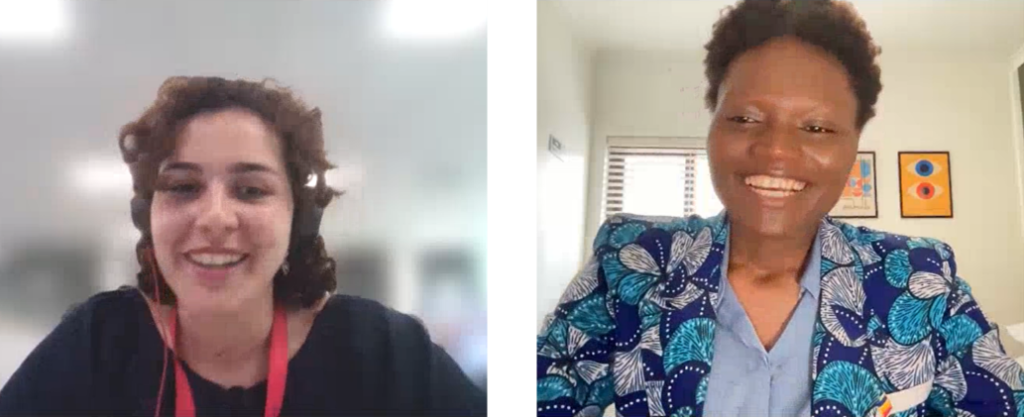
Discussing nature-based solutions with Livia.